
Pinewood Infant School and Foundation Unit 'Together we give children the roots to grow and the wings to fly'
School Improvement
School Improvement Plan Guide for Parents and Carers 2026-27
The School Improvement Plan is the document which drives ongoing improvements and developments in school. The Governing Body is responsible for evaluating the progress made against the plan and has an approved process in place for regular and effective monitoring. At Pinewood we never ever sit tight, we are always striving for improvement and excellence in all that we do. Our main school priorities this year are:
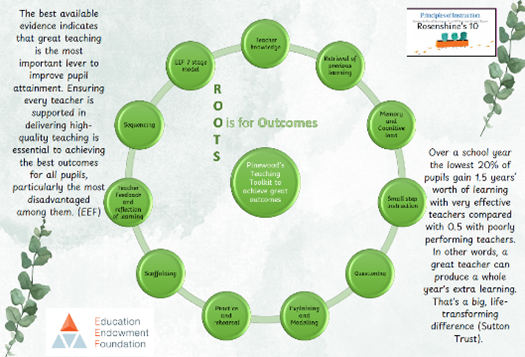
Priority 1: To further embed our School’s Teaching and Learning Toolkit
Last year we made our own school version of a ‘teaching and learning toolkit’ based on firm research so that all staff, new and old, have a comprehensive understanding, with all information in one place, of what excellent teaching looks like in our school. Much work has already gone into this last year and we are now further embedding the toolkit to ensure excellent standards in every classroom through every subject.
Priority 2: To further strengthen our inclusive provision
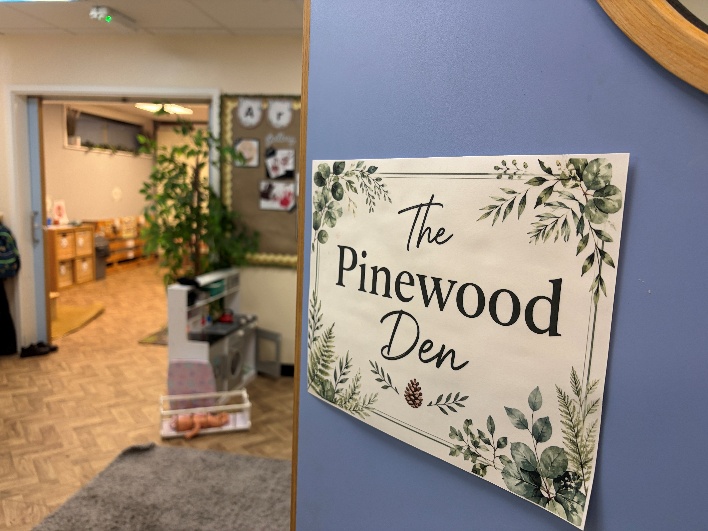
At Pinewood, we are proud of our highly inclusive approach and our commitment to ensuring that every child feels valued, supported and able to flourish. As the needs of children continue to evolve some are increasingly complex, we are adapting our provision to ensure we can meet those needs effectively while maintaining the high-quality education all children deserve. High-quality teaching in the classroom remains at the heart of what we do. Alongside this, we are expanding our nurture provision as part of our adaptive approach to supporting children. By offering a flexible balance of nurture support and classroom learning, we can respond more effectively to individual needs while remaining true to our inclusive ethos.
Priority 3: To continue to strengthen our outward-looking culture
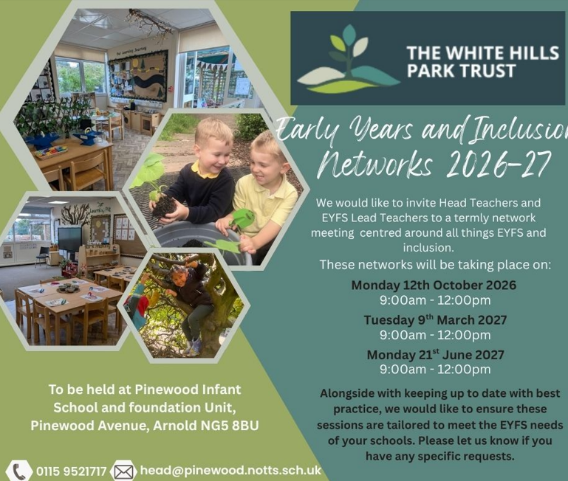
While our first responsibility is always to the children and families of Pinewood, we also recognise that schools achieve more when they work together rather than in isolation. By working collaboratively with other schools, trusts and educational partners, we can share effective practice, learn from one another and develop better solutions for children. Collaboration also strengthens our own school. When our staff support colleagues in other settings, lead professional networks or contribute to wider education initiatives, they bring back new ideas, fresh perspectives and valuable expertise that benefit Pinewood pupils directly. It helps us continually reflect, improve and ensure our provision remains innovative, evidence-informed and responsive to children's needs.
Priority 4: Strengthening School Readiness Through Partnership
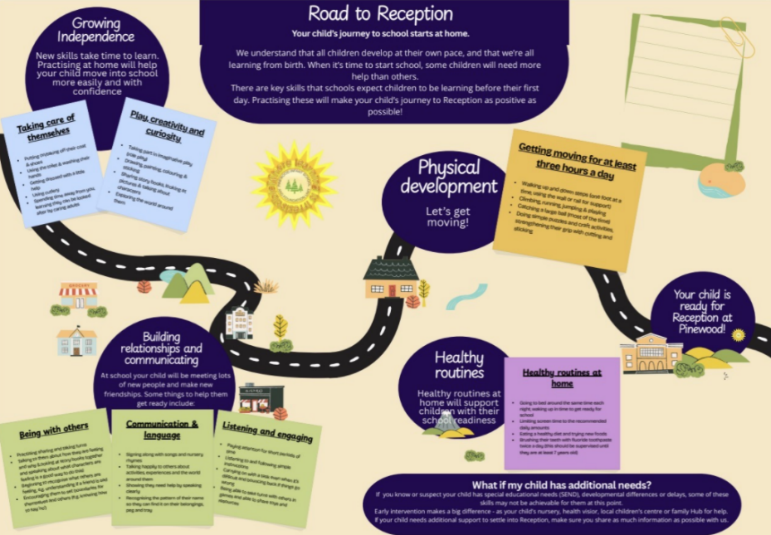
We know that children are most successful when the adults around them work together. That is why we are committed to strengthening our partnerships with local nurseries, pre-schools, childminders and Family Hubs to ensure children experience a smooth and positive transition into school.
Together We Can Make a Difference
How you can help?
Supporting our inclusive approach
- Working closely with school staff to share information about your child's needs and strengths.
- Supporting strategies agreed between home and school so that children receive consistent messages and support.
Promoting a positive attitude to learning
- Ensuring your child attends school regularly and arrives on time.
- Reading with your child and talking about their learning each day.
- Encouraging independence through everyday activities, such as dressing themselves, organising their belongings and solving simple problems.
Working in partnership with other families and the wider community
- Supporting school events, workshops and information sessions.
- Sharing positive experiences of the school and helping us build strong community relationships.
- Understanding the importance of schools working together to improve opportunities for all children across the local area.
Supporting school readiness
- Encouraging routines that help children feel secure and prepared for learning, such as regular bedtimes and healthy habits.
- Developing communication, language and social skills through conversation, play and shared experiences.
- Engaging with opportunities provided by Family Hubs, early years providers and the school to support your child's development.